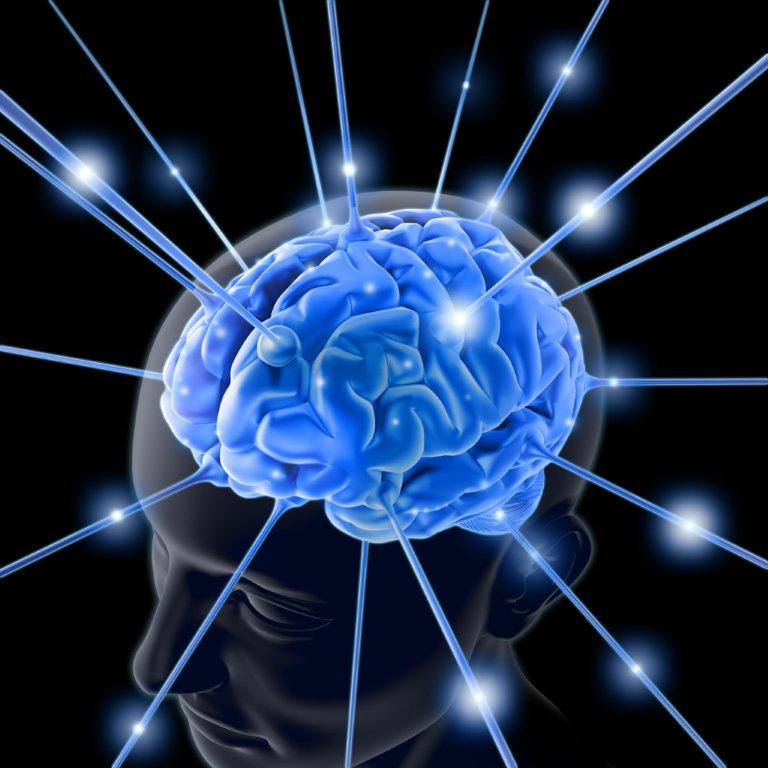
“Why naturalism fails to explain matters of the mind”
Following the publication of Darwin’s Origin of Species in 1859, western culture experienced an enormous shift in its foundation of thought. Darwin proposed a purely naturalistic mechanism to account for the diversity of life on earth, eliminating the need for a deity of any sort. Beginning in the science department, it was not long before the ripple effect of naturalism infiltrated nearly every other hall of the academy. If the naturalists were correct – no god exists and the universe is nothing but matter and energy – each area of study must be rewritten on these terms, from science and philosophy to history and ethics.
Naturalism, as with any worldview claims, must correspond with reality on all levels; therefore, every subject of study must submit to naturalistic presuppositions. If contradictions and incoherence arise (i.e. a naturalistic version of a subject fails to correspond with reality), the worldview as a whole is undermined and alternatives must be sought. I aim to show here that naturalism faces serious challenges from the field of metaphysics, specifically issues of the mind, and that Christian theism provides a more coherent system within which to makes sense of reality. Readers will perhaps find this evidence against naturalism more compelling than any other, for it deals with what we each know best, our own personal experiences and selves.
The Problems of Mind
The existence of minds and the complexities associated present the naturalist with a host of problems. These difficulties can be separated into three main categories: consciousness, the self (or soul), and the will. In the remainder of this article, each will be examined and shown to be serious threats to the naturalistic worldview.
The Problem of Consciousness
Consciousness can generally be defined as what you are aware of from the first person perspective, usually consisting of one of the following states: sensations, thoughts, beliefs, desires, and volitions. However, consciousness can also be described in the following four ways. Phenomenal consciousness is the raw experiential feel of being awake. It is the “what it is like” of a particular event. Epistemic subjectivity is possessing direct access to my own conscious states; it is the ability to introspect. Although a neuroscientist may have more knowledge of my brain states than me, he can never achieve a greater knowledge of my mental life than me, for only I have access to this. Ontological subjectivity refers to a conscious state always being associated with an “I” – they belong to a subject. Access consciousness is having second order thoughts about first order thoughts, that is, conscious persons can think about their thinking and other mental states. This type of consciousness gives vividness to our experiences.[1]
So what implications does this have for the naturalist? Although he believes in a world comprised solely of matter and energy, consciousness seems to point to an immaterial self that observes the physical world. So what has been offered by the materialist to counter this threat? The most common response is to state that consciousness is nothing but an illusion (Daniel Dennett is one proponent of such a view). On this view consciousness is just the outworking of physical processes, therefore there really is no first person perspective, just chemical reactions. Does this claim have merit?
According to Leibnitz’s law of identity (i.e. if x has a property that y doesn’t have, then x and y are not identical), if consciousness is nothing more than brain states, then what is true of brain states must be true of consciousness. But this certainly is not the case as shown by the following examples. Thoughts can have the property of being true or false, but brain states do not possess this property. Thoughts don’t have geometric or chemical properties but brain states do. Thoughts have intentionality (an of-ness or about-ness) to them, a quality that brain states lack. Finally, neuroscience itself – the study of brain states – relies on first person reports, the very thing neuroscience does not have access to. For these reasons and others, we can affirm the immaterial reality of consciousness, and if true, naturalism suffers another crippling blow.
The Problem of the Self/Soul
The Christian view of persons claims that each individual possesses a soul, a collection of faculties such as the mind, the will, emotions, the senses, etc. The soul is the “you” of you, the essence of your humanity without which you would not be human. Naturalists on the other hand deny the immaterial soul, claiming we are nothing more than a collection of material parts. Among the many arguments for the existence of the soul, two should be mentioned.
First, I am not capable of being divided into parts like material objects. For example, if I were to lose all my limbs, I would still be Jordan; therefore I am not my body. I may even lose a portion of my brain due to a surgery, but I would still be 100% me – not just partially me. Although unprovable, this intuitive notion of indivisibility seems to point to an immaterial essence or soul, an unacceptable conclusion for naturalists.
Second, human beings seem to posses a particular essence or soul that endures through time, a self that experiences change and events. As I reflect on my own life events, it appears the same self, not some collection of different selves, experiences all these events. Since the naturalist denies the existence of the soul, they must adopt an aggregate view of humanity where persons are nothing more than a collection of material parts. But since there is no essence or self, the material aggregate changes identity with every physical change, creating challenging ethical problems. Consider someone who commits a crime and then is convicted one year later. Is it truly fair for the convicted felon to serve jail time for a crime committed by a different, non-identical human? The convicted felon could rightly say, “It was not me who committed this crime but anther man.” Certainly one can see the chaos that would result from this materialistic view of humanity.
Finally, and perhaps most interesting, is the binding problem. When our sense receptors begin collecting data from the material world (sights, sounds, etc.), different parts of the brain in geographically different locations process this information. Colors are processed in one area, shapes another, etc. Yet when we “see” in our mind’s eye, we have a unified field of vision – a unified experience. What accounts for this? Who or what is doing the collecting of this data from the different regions of the brain, putting it together, and then giving you (whoever “you” is) a unified picture of the world? The soul provides an adequate explanation for this phenomenon.
The Problem of Free Will
The final, and arguably the most crushing problem for naturalism is that of the will. Morality, ethics, relationships, debates, rational discourse, the learning process, and nearly every other aspect of human life hinge upon the notion that people posses a will to choose. Without the ability to choose, humans are reduced to machines, automata that receive inputs and produce outputs. But the ability to make a choice presupposes a self who does the choosing, an unacceptable conclusion for the naturalist. So how might the naturalist respond? How do they reconcile this problem?
Those who seek to reconcile the intuitive notion of free will within a naturalist worldview often resort to a view known as compatibilism. Compatibilism states that things outside your control determine everything you do; while you are free to follow your desires, you are not free to desire what you want. They would argue that persons have the hypothetical ability to choose differently, but nevertheless they never do, for one always acts on their strongest desires.
This should strike the reader as nothing more than philosophical slight of hand. Compatibilism makes free will an illusion and makes determined, materially based desires the efficient cause of action. But they have done nothing to solve the problem of free will, rather they have only pushed it back one level. At the core, humans are nothing more than a can of coke – fizzing over due to chemical reactions inside the can.
If the naturalist chooses to accept this position, another problem has been created, that of self-refutation. If choices are nothing more than the result of prior chemical or neurological causes, then the naturalist “chooses” to hold his position of naturalism and compatibilism not because of a free choice based upon evidence but based upon his chemical reaction. He has therefore undercut his entire argument and committed intellectual suicide. Why should anyone believe the truth-value of a chemical reaction? Additionally, how could a Christian be faulted for his belief in free will, since it was only a reaction that led to that belief? So if compatibilists are correct, we could never know for sure. In fact, can we even be said to know anything at all?
Problems of the Mind: Conclusion
As evidenced by consciousness, the soul, and the will, the naturalist has severe problems trying to account for these realities. Efforts to avoid obvious conclusions force the naturalist to embrace counterintuitive and even self-refuting positions. They must deny free will, eliminate the “you” of you, and reduce your mind to a chemical chain of proverbial dominos. For the rational thinker, this seems too high a price to pay. There must be a better alternative.
The Christian Alternative
If Christianity is a true and accurate description of reality, it must be able to account for the truths discussed above, namely the existence of mind, soul, and will. Regarding mind, first consider God as described in the Bible – a rational, moral, and immaterial being. Human beings are created in his image, therefore we posses many of the same attributes. We choose because God chooses. We think because God thinks. We are moral beings because God is a moral being. We are, at our core, immaterial beings, just like our creator. Christianity can explain the mind, consciousness, and the will because it claims these phenomena originate in the creator God. Where naturalism falters, Christianity seems to offer supreme explanation, an explanation consistent with Christian doctrine and the experience of reality.
Jordan Tong
[1] These definitions were given by Dr. J.P. Moreland during a lecture given at BIOLA on January 11-12, 2013.


 Jordan D. Tong
Leave a reply to Debilis Cancel reply