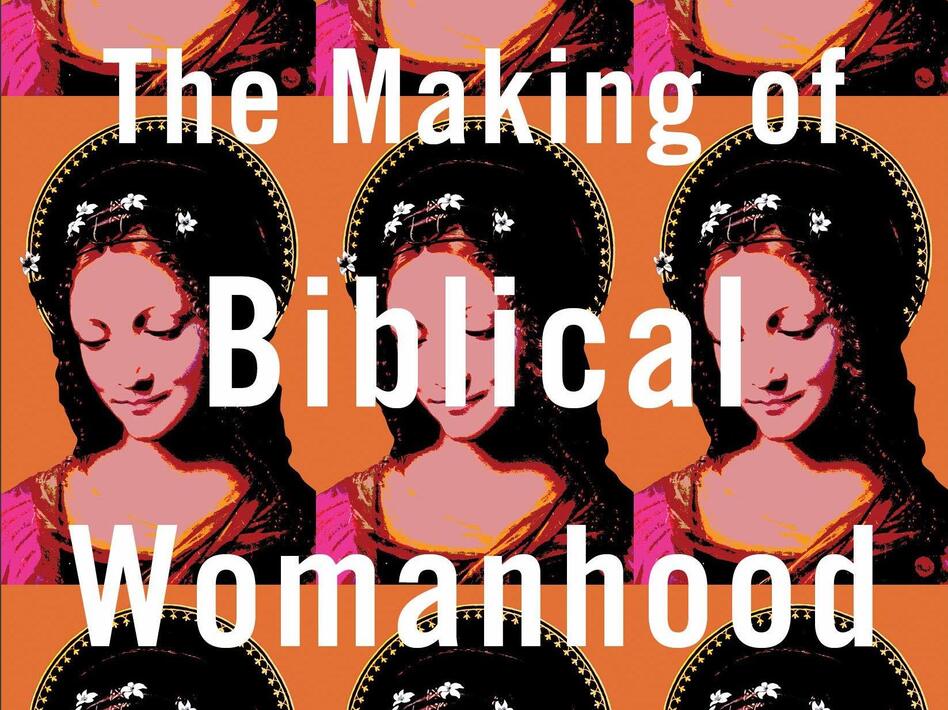

So I’ve finally finished reading The Making of Biblical Womanhood by Beth Allison Barr. This book has been somewhat of a “best-seller” in conservative Evangelical circles. Given its popularity and the limited critiques written from a complementarian/patriachal position, I felt it appropriate to say a few words (ok….maybe a lot of words). There were a few parts of the book that were helpful, even enlightening. I’ll list those before I dive into the critiques.
First, I think Barr rightly points out some of the forgotten women of church history. These are stories that need to be remembered, passed on, and talked about so men and women both can be encouraged. It also helps highlight that women are a real and vital part of the global church. Second, Barr accurately identifies the real abuses of men in the modern church and throughout church history. These are real sins that deserve to be called such. Third, I do agree (at least in part) with some of her critiques of the cult of domesticity. Leave It To Beaver house-wifery is by no means the Biblical standard. While a woman is called/designed to bear and nurture children (and live primarily for the benefit of her home), this does not imply she is perpetually homebound, with her life calling confined to cooking, cleaning, and doing laundry. Finally, after reading this book, I do think there is a compelling case to be made for female deacons. I’m not convinced of this, but I’m definitely open to it.
While I have many critiques of the book, I point out a few of the major ones that seemed to permeate the text, or play a major role in her arguments.
Her Overall Argument – History & Experience
On page 9, at the end of the introduction, she says the main reasons for her moving away from the complementarian position were arguments from history and her own personal experiences. I will deal with this in another section, but right out of the gate this should at least raise a couple of alarm bells. To be fair to Barr, she isn’t setting out to present a Biblical case for egalitarianism. So I can’t criticize her for not doing something well that she didn’t intend to do in the first place. However, if a conviction is to be formed about such matters, one would think Scripture would take priority over history and experience. This doesn’t necessarily make her argument bad, but it does raise a red flag. As it relates to her experience, the issue of her husband losing his job has absolutely ZERO significance one way or the other as it pertains to her argument. The same could be said about her horrific relationship. While terrible, it says nothing (in terms of argumentation) of whether or not complementarianism is inherently wrong.
Faulty Assumption – Patriarchy Is Bad?
Barr seems to make an assumption that runs throughout the book that patriarchy is inherently wrong. This is crystalized when she criticizes Russ Moore when he says Christian patriarchy is different than pagan patriarchy. She goes on to say on page 18, “Patriarchy by any other name is still patriarchy.” This is an assumption she is making – that patriarchy is bad. She does no set out to prove this Biblically or ethically. She just assumes it. She uses terms like “male authority” and “female submission” and just assumes we will all see the moral problem with those terms/ideas. There certainly isn’t a Biblical problem. And she doesn’t appear to make any ethical arguments either. She also claims on page 18 that unequal roles refutes the idea that men and women have equal value. But this claim assumes worth is calculated by roles rather than something intrinsic to the person (e.g. being made in the image of God).
It is also worth noting that her position on patriarchy closely aligns with Critical Race Theory. CRT, loosely speaking, sees those in power as inherently oppressing those not in power. This is why “whiteness” has been something many people have been ashamed of in recent years. To be white, according to CRT, is to be an oppressor or complicit in oppression. She seems to adopt a similar stance, namely, that if a man is in “power,” there is oppression happening. She shows her hand on this CRT connection when she uses the phrase (on multiple occasions) “white, upper-middle class.” She even makes the connection more explicit by arguing that patriarchy and racism go hand in hand.
Secular Patriarchy Exists Alongside Christian Patriarchy
Part of her historical argument, especially toward the beginning of the book, is that patriarchy has always existed. It existed inside Israel and outside Israel. It existed inside the church and outside the church. We see evil and abusive patriarchy in Israel/Church and we see it outside those institutions. The conclusion she draws is that patriarchy is part of the evil fabric of sinful humanity. It is not this unique, sanctified creation of God. She also dismisses any attempt of drawing a distinction between the abuse of an institution vs. the institution itself (or Christian vs. pagan versions of patriarchy). But just because patriarchy exists all over the world (always has), why does this mean it is inherently wrong? For instance, marriage exists both inside and outside the Church. Pagans have married since time began. Sometimes those marriages looked like Christian ones and sometimes they didn’t. Some things are built into the fabric of creation and we SHOULD EXPECT to see those played out (albeit imperfectly) in all peoples at all times. She uses this as an argument that Christian patriarchy is not unique. Ok? But we could flip this and just say that patriarchy is part of the natural order that God designed and therefore it is ubiquitous. If I’m being totally honest, I don’t see how this counts as any evidence in favor of her argument.
Biblical Arguments Are Weak
Barr doesn’t spend a lot of time in her book exegeting the text. She spends a very short section on trying to show that patriarchy was a result of the fall in Genesis 3. Then she attempts to deal with 2-3 of the “problematic” Pauline texts. What I find interesting was that all she basically did was offered some “what if” scenarios. What if Paul actually meant this? At the end of the day, her argument comes down to Paul being culturally bound and we must interpret him in light of his cultural context. This is why the egalitarian position often leads to softer views on homosexuality and a denial of traditional views of inspiration/inerrancy. In fact, she tips her hat to a compromise of inerrancy. She also attempts to make a big deal of the women finding the tomb and stating they were the first preachers. Let’s be honest, this is a bit of a stretch (assuming you are trying to use it as an argument for female pastors). In like manner, she tries to make something of Junia, but this too is by no means obvious in the text of Scripture.
What seems more problematic is not how she attempts to re-work the hard Pauline texts (though I think this is all a bit of a stretch), she ignores so much of the rest of Scripture. God clearly is presented as a Father. Patriarchy is never spoken out against in the Bible. She doesn’t (at least not that I can remember) deal with 1 Peter 3. The Levitical priests in the OT were all male (as required by God). God came in the flesh in the form of a male. All the apostles (the 12 chosen by Jesus) were men. The overwhelming view you get from the NT is that men were the apostles, preachers, and teachers. Sure, you can debate about a few cryptic verses, but overall, the complementarian/patriarchal position is clearly assumed and reinforced. Jesus and the rest of the NT does certainly elevate woman from their cultural bondage, but the elevation doesn’t include what Barr seems to think it does. In the words of one secular historian, “The Bible is hopelessly patriarchal.”
One final side note on her Biblical arguments. At the end of the book (next to last chapter I think), she accuses modern proponents of complementarianism with the heresy of Arianism. This has two problems. First, not all, nor even most, complementarians hold the position of the eternal subordination of the Son. Piper and Grudem do, but many, many others do not (Kevin DeYoung for example). Second, even if you hold to Piper and Grudem’s position, it is in no way the heresy of Arianism. The eternal subordination of the Son in terms of role, in no way takes away from the divine essence the Son shares with the Father and Spirit.
History Isn’t Prescriptive, It’s Descriptive
Finally, since her entire book is peppered with historical examples of women preaching, she believes they carry evidential weight. Apparently since people in history have espoused her position, she thinks this means it was more acceptable (or perhaps that her position isn’t new). Honestly though, I don’t really know what these examples are supposed to do for her argument. Just because there were women in history who did preach, or men who supported them, this doesn’t mean that position is correct. Even a few hundred examples of women preaching is VERY small in comparison to the vast ecclesiastical history of the past 2000 years. Additionally, what’s missing are examples from the New Testament or the first several hundred years of church history. I have even searched on my own and came up empty handed. History might be able to tell us a few things that did happen, but it doesn’t tell us what SHOULD happen.
I’d love to hear what you think.
 Jordan D. Tong
Leave a comment